A wide front maw
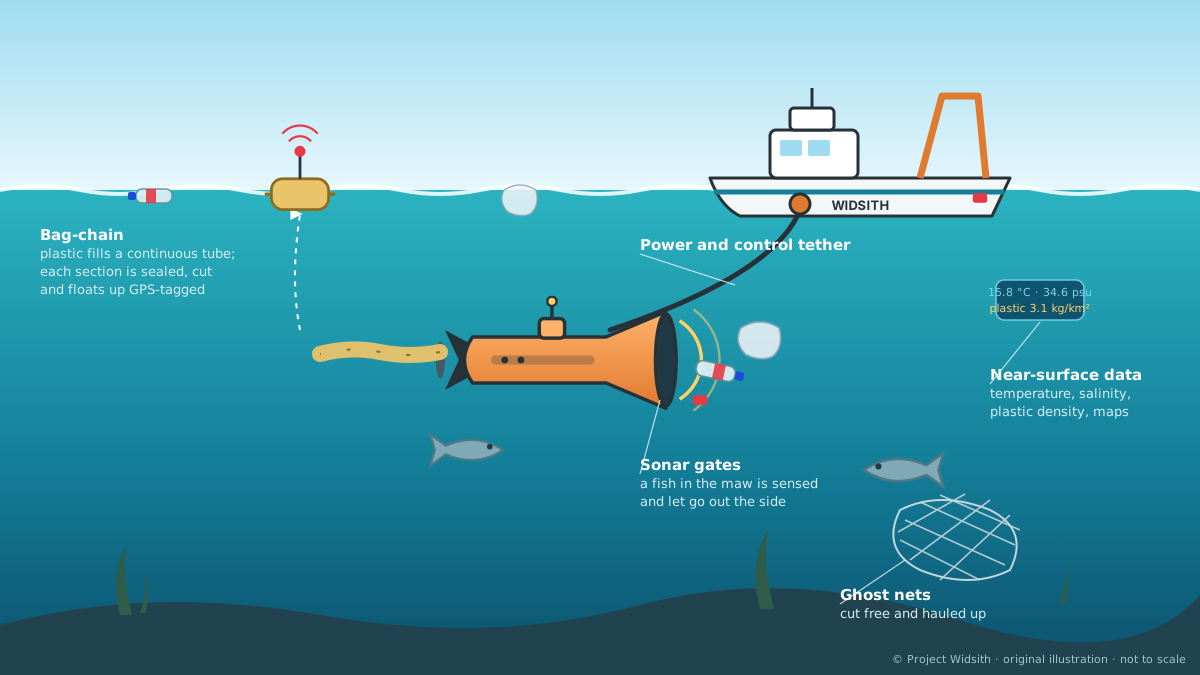
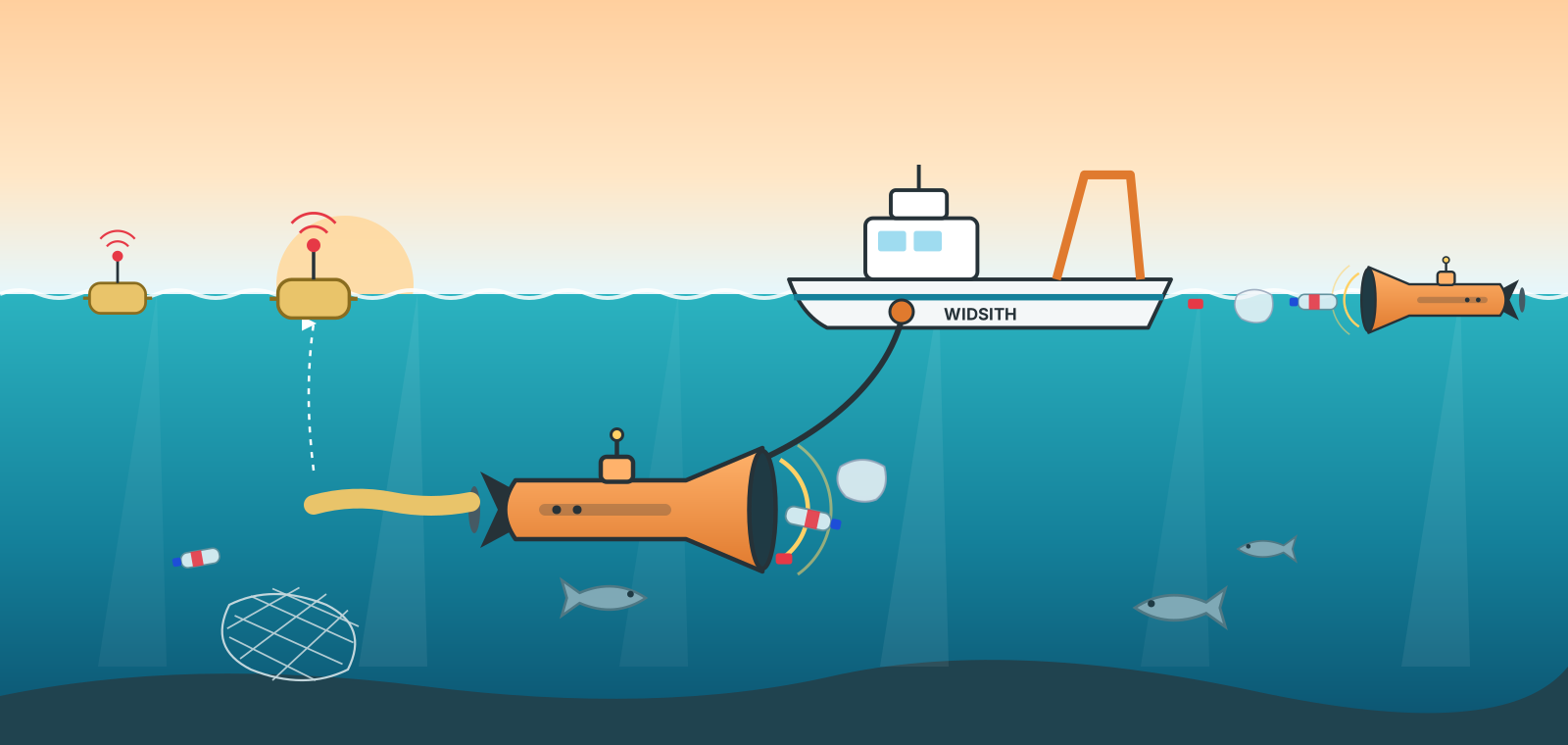
is designed to take in floating and drifting plastic as the drone moves just below the surface, or skims the surface itself in calm water.

Project Widsith · the Nautilus
We are designing the Nautilus: a drone that works just below the surface, takes in floating plastic, lets the fish go, and seals what it catches into bales. The first one will be small, on a tether in harbors and river mouths, and the family grows phase by phase.
Design stage: building the team for the Phase One prototype.
The problem
Through rivers, through harbors, and as fishing gear that breaks loose and keeps on fishing. Those are the places to start.
How every Nautilus is designed to work
is designed to take in floating and drifting plastic as the drone moves just below the surface, or skims the surface itself in calm water.
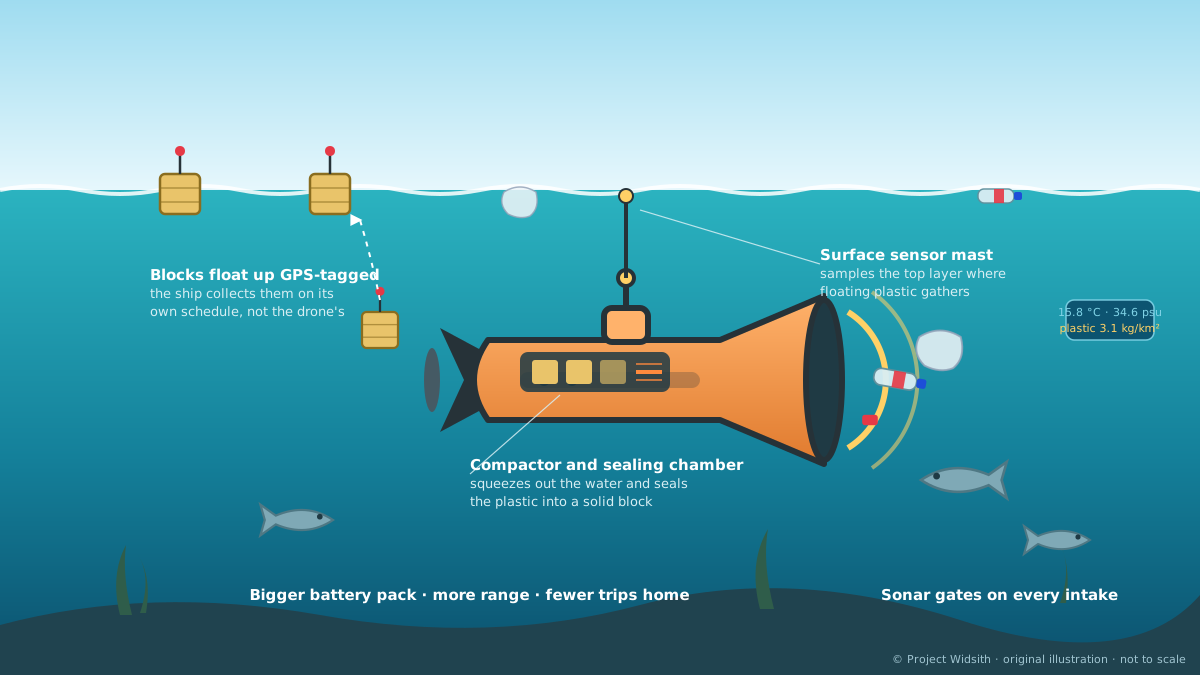
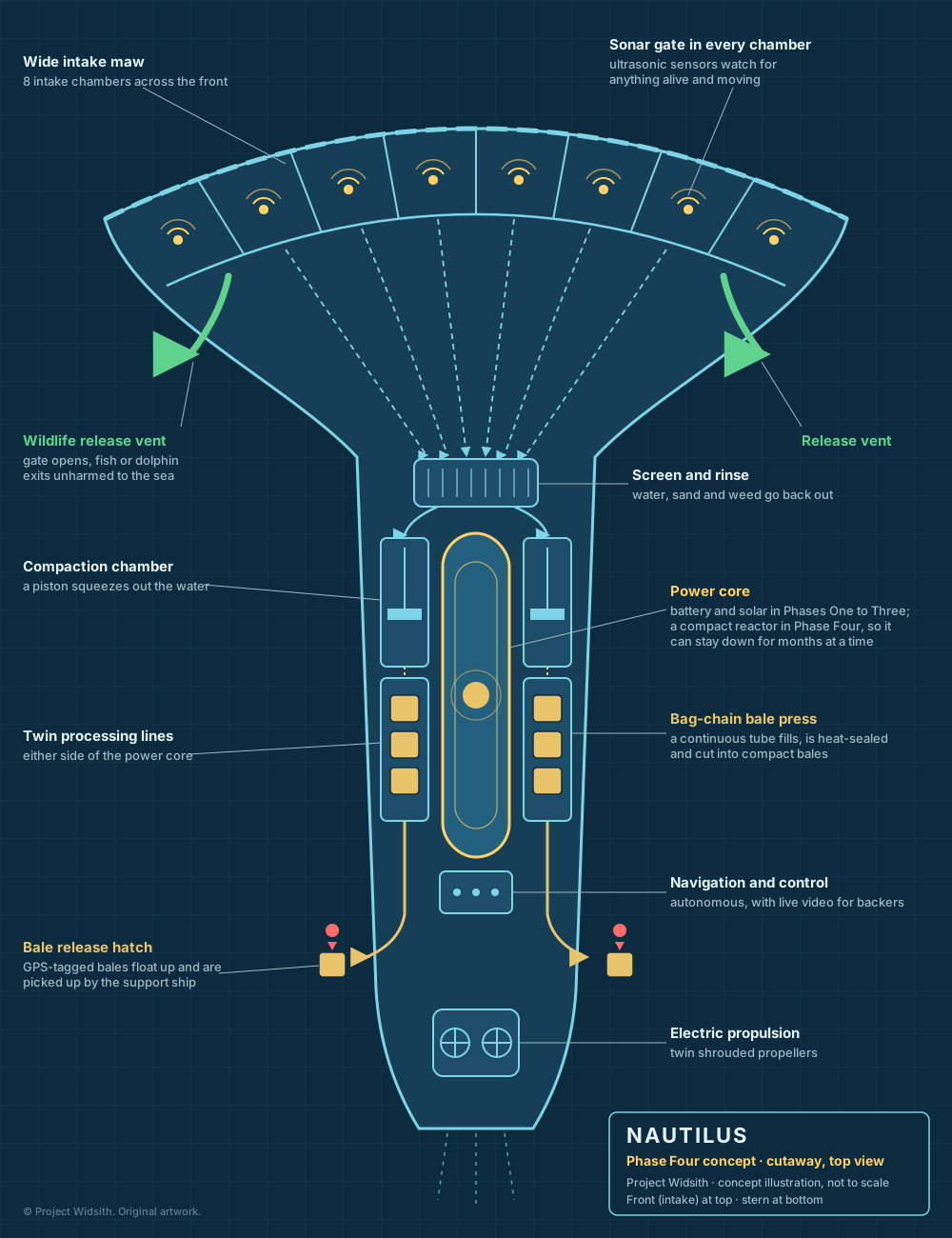
on every intake will sense anything alive and swimming. A fish, turtle or dolphin is let out the side before anything is compacted.
no pumps and no blades: a slow intake and a rinse-back screen return water, weed and small drifting life to the sea.
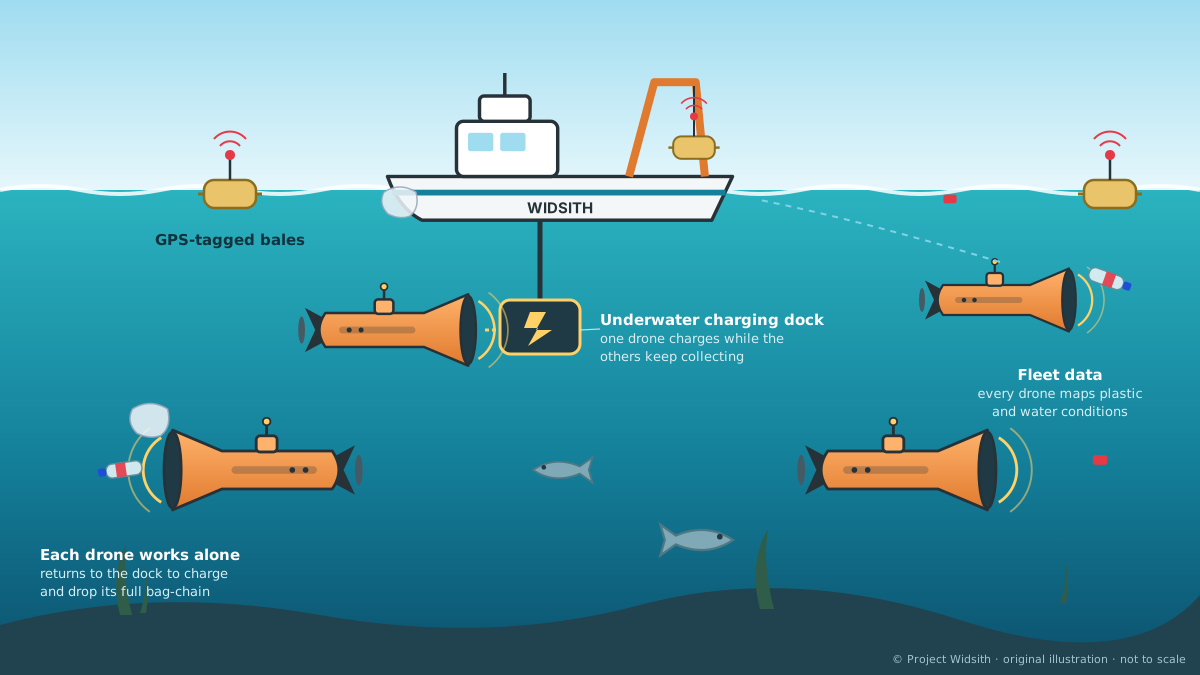
plastic fills a long tube that is sealed and cut into bales: up the tether to the boat in Phase One, floating up with a GPS tag in later phases. The drone keeps working instead of going home to empty.
every Nautilus will measure temperature, salinity and plastic density as it travels, building live maps of where plastic gathers.
lost nets keep killing for years. The Nautilus maps them with sonar below the surface and marks them for removal crews, rather than trying to swallow them.
Sea life first
The fair criticism of ocean cleanup is that it catches living things along with the plastic. We take that seriously. Animals that swim are sensed by sonar and let out through a side gate. For life that drifts and cannot swim away, the answer is not a gadget but how the drone is built and where and when it works.
How we protect sea life →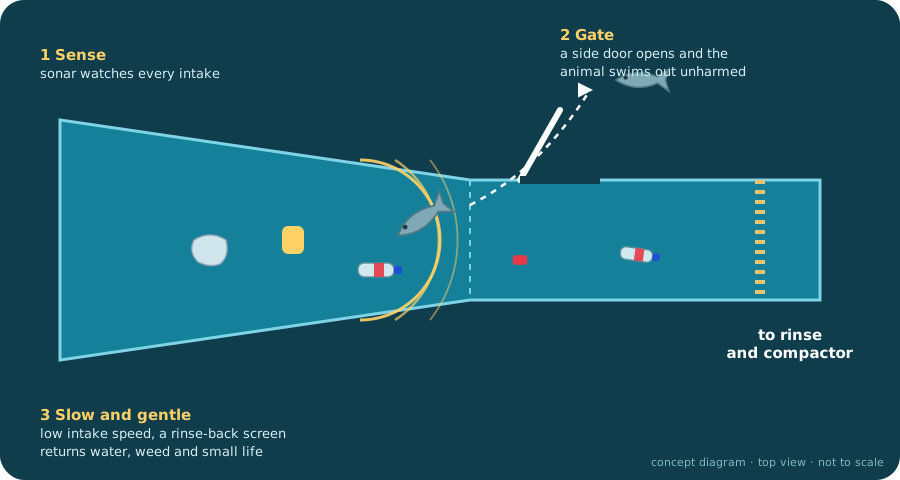
Common ground
Project Widsith began with a question from a niece: what could we build that liberals and conservatives would both support? Getting plastic out of the ocean is one of the very few causes almost nobody opposes. Cleaner beaches, healthier fisheries, safer wildlife, and a practical engineering answer paid for by people who choose to back it.
Washington agrees. The Save Our Seas 2.0 Act, signed in December 2020, was sponsored by Republican and Democratic senators together.
Get involved
Like adopt-a-highway, for the ocean. Your name on the live map while the Nautilus cleans your stretch.
Sponsor miles →A live map and HD video from the drone, plus counters for every pound and net. Coming with Phase One.
See the app →Engineers, marine scientists, student teams and video makers: Phase One needs you.
Join the crew →Fundraising opens soon. Get on the list and be first to back the Phase One prototype.
Notify me →Join the crew
Get project news a few times a year: the prototype, the first missions, and the day fundraising opens. Or tell us how you'd like to help. We read every message.